
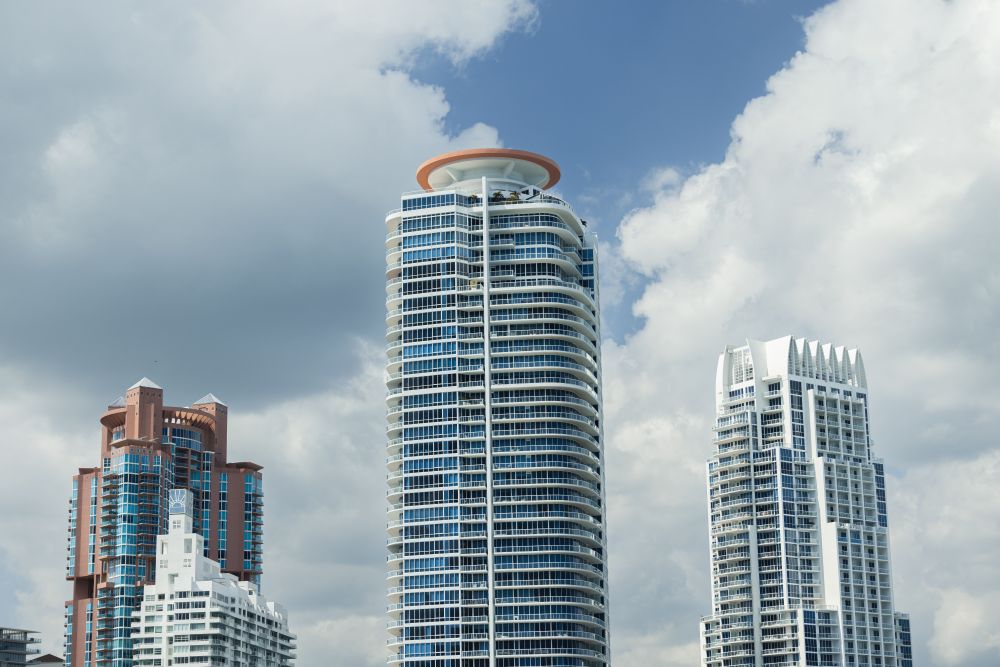
Miami Towers are facing growing scrutiny as new research raises concerns about uneven building settlement across Miami-Dade County. Luxury high-rises along the coast may be sinking at different rates, creating potential risks for building structures and raising questions about future repair costs, insurance expenses and developer liability.
According to reporting by the Miami Herald, new findings suggest that some buildings are settling unevenly rather than simply sinking at a steady rate. This process, known as differential settlement, can place stress on building components and potentially lead to expensive damage over time.
The issue is important for a region known for its luxury condominiums, waterfront developments and ambitious high-rise projects. If uneven settlement continues, developers, condominium owners and property managers could face significant financial and legal challenges.
Miami Towers Show Signs of Uneven Settlement
Buildings naturally settle after construction. As a high-rise places weight on the ground below it, the underlying soil compresses and the structure may gradually move downward. In many cases, engineers can account for this process during design and construction.
However, researchers have identified a more complicated pattern in parts of Miami-Dade County. University of Miami professor Falk Amelung published research in 2024 indicating that at least 35 buildings along Miami’s barrier islands were still sinking years after construction had ended.
The buildings identified in that research included the Porsche Design Tower, the Estates at Acqualina and several properties carrying the Trump Organization brand. The findings attracted attention because the affected structures include high-profile luxury developments along some of South Florida’s most valuable coastal real estate.
At the time, city officials did not consider the findings an immediate reason for alarm. Building settlement can sometimes be managed through engineering work and repairs, depending on the scale and nature of the movement.
Amelung’s further research, however, has raised a different concern. Rather than focusing only on whether buildings are sinking, the newer findings examine whether different parts of a building are moving at different rates.
That distinction matters because uniform settlement and uneven settlement can have different consequences. When a structure moves unevenly, the resulting stress may affect its foundations, internal systems and exterior components.
Why Miami Towers Could Face Structural Damage
Differential settlement occurs when one part of a building sinks more than another. This uneven movement can cause a structure to tilt or place additional stress on parts of its design that were not intended to absorb that level of strain.
Over time, the effects may become visible in several ways. Buildings can develop cracked facades, damaged pipes, uneven driveways and warped floors. Depending on the severity of the movement, repairs may involve more than cosmetic work.
Cracked exterior surfaces, for example, can require investigation to determine whether the damage is superficial or connected to deeper structural movement. Similarly, damaged pipes may lead to costly repairs if the building’s plumbing systems can no longer accommodate changes in alignment.
Uneven floors and driveways can also create problems for residents and property managers. Although individual signs of damage do not automatically prove that a building has a foundation problem, they may require professional inspection to identify the underlying cause.
The financial impact could extend beyond the cost of repairing visible damage. Building owners may need additional engineering assessments, structural monitoring and maintenance work. Insurance costs could also become a concern if settlement-related risks affect a property’s risk profile or lead to more frequent claims.
For luxury developments, these expenses could be especially significant. High-rise buildings often contain complex mechanical systems, extensive shared facilities and expensive exterior finishes. As a result, investigating and repairing damage can require substantial coordination and investment.
Developer Liability Could Increase Costs
The potential consequences are not limited to building owners. Developers could also face legal and financial exposure if settlement-related damage qualifies as a construction defect under Florida law.
According to the Miami Herald, Florida law holds developers legally responsible for construction defects during the first seven years after a building receives its earliest official certificate of occupancy or completion. The precise application of that responsibility depends on the relevant legal circumstances and the nature of the alleged defect.
If uneven settlement leads to damage during the applicable period, affected parties could seek repairs or pursue legal claims against those responsible. Determining liability, however, may require detailed engineering investigations to establish the cause of the movement and whether construction practices contributed to it.
These questions can become complicated when several parties participate in a development. Developers, contractors, engineers and other members of the project team may have different responsibilities, depending on their roles and the facts of a particular case.
Furthermore, the source of a building’s movement may not always be straightforward. Soil conditions, foundation design, construction activity and nearby development could all require examination before experts can determine what happened.
For developers planning new projects in Miami-Dade, the findings highlight the importance of careful site assessments and long-term monitoring. They also raise questions about how responsibility should be handled when construction activity potentially affects existing properties nearby.
Nearby Construction May Affect Miami Towers
One of the more significant concerns raised by the research is the possibility that new development can contribute to settlement in neighboring buildings. If construction changes the conditions around an existing structure, nearby properties may experience movement that leads to damage or disputes.
The issue is particularly relevant in densely developed coastal areas, where large high-rises can stand relatively close to one another. New projects may require excavation, foundation installation and other work that must be carefully assessed for its potential effects on surrounding buildings.
A previous dispute involving Miami’s Millennium Tower illustrates the possible financial consequences. In 2016, the building’s homeowners association sued the development team behind the nearby Porsche Design Tower, seeking nearly $4 million for repairs.
The association alleged that construction of the Porsche Design Tower caused cracks throughout the Millennium Tower. The claim illustrates how neighboring developments can become involved in costly disputes over alleged construction-related damage.
However, an allegation in a lawsuit does not by itself establish that the nearby project caused the damage. Such disputes can require technical evidence, expert analysis and legal proceedings to determine whether a causal connection exists.
Even so, the case highlights the financial stakes when building movement affects properties beyond the boundaries of a new development. If owners believe nearby construction has damaged their buildings, developers could face claims involving repairs, investigations and other associated expenses.
The possibility of these disputes adds another layer of risk to major construction projects. Developers may need to consider not only the performance of their own buildings but also the potential effects of construction on surrounding structures.
Experts Call for Stronger Monitoring Rules
Experts have urged officials to take differential settlement seriously and called for more research into Miami’s subsurface geology. Better information about the ground beneath the region could help engineers understand why some buildings continue to move and why settlement may vary between neighboring structures.
More detailed geological research could also improve the assessment of future construction sites. If engineers gain a clearer picture of local soil conditions, they may be better equipped to evaluate foundation designs and identify areas where additional precautions are necessary.
Another proposal involves changing building codes to require long-term settlement monitoring. Such requirements could help identify unusual movement before it leads to more serious damage.
Regular monitoring may also provide valuable evidence when owners or developers need to investigate a building’s condition. Measurements taken over time can help engineers distinguish normal settlement from movement that may require further evaluation.
Some experts have also suggested reviewing Miami’s high-rise permitting process. This could involve examining whether existing requirements adequately address the potential effects of new construction on neighboring buildings and whether additional safeguards are needed in densely developed areas.
Another proposal is to consider a moratorium on narrow high-rises. Such a measure would represent a significant policy decision, and its potential scope and impact would require careful consideration. The suggestion reflects wider concerns about whether current development practices sufficiently account for local geological conditions and the risks of uneven settlement.
What the Findings Mean for Miami Real Estate
Miami’s real estate market includes high-value waterfront properties and major developments that contribute to the city’s international profile. Concerns about building settlement could therefore have implications for developers, condominium associations, investors and prospective buyers.
For developers, the findings reinforce the importance of site-specific engineering studies, construction oversight and appropriate monitoring. Projects that affect neighboring buildings may also require careful assessment of surrounding conditions before and during construction.
For condominium associations and property owners, the research highlights the value of investigating unusual movement and maintaining accurate records of a building’s condition. Professional assessments can help determine whether observed cracks or other changes are cosmetic, related to normal settlement or signs of a more serious problem.
Investors may also pay closer attention to engineering reports, maintenance budgets and the financial resources available for future repairs. However, the research does not establish that every building identified is unsafe or that all affected properties will experience significant damage. Each structure requires an assessment based on its own condition and circumstances.
Insurance and maintenance costs are additional issues to watch. If settlement creates a need for more inspections, repairs or risk management, property owners may have to account for those expenses in their long-term budgets. The extent of any effect will depend on the building, the nature of the movement and the findings of professional evaluations.
Ultimately, the research raises important questions about how Miami should manage continued high-rise development in a complex coastal environment. More geological research, stronger monitoring practices and a review of building requirements could help officials and industry professionals better understand the risks.
As experts continue to examine the issue, the focus will be on determining how widespread differential settlement is, what causes it and which safeguards can reduce future damage. For Miami’s high-rise market, those answers could influence construction practices, building oversight and the way developers manage potential liabilities.

