
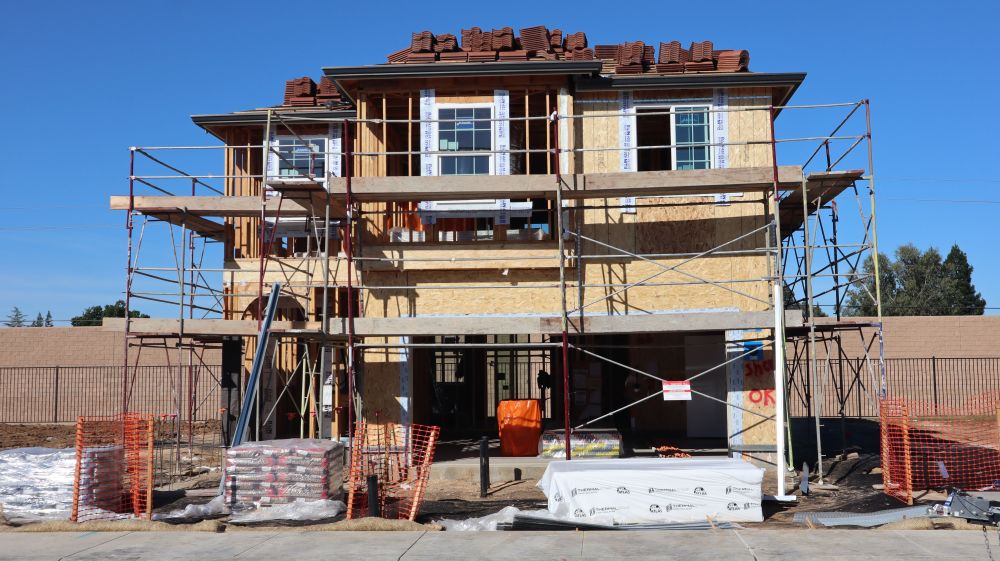
The U.S. housing construction market is losing momentum in 2026, raising concerns about the country’s long-term housing supply and affordability. New building permits have declined for 44 consecutive months on a year-over-year basis, according to a new analysis from Zillow. The slowdown comes as the country faces an estimated shortage of 4.7 million homes.
More than 1.42 million residential building permits were issued nationwide in the 12 months through July 2026. That figure represents a 1.7% decline from the previous year. It also sits 19.4% below the trend established during the five years before the COVID-19 pandemic, marking the largest gap of the decade.
The latest figures point to a difficult balance for the U.S. property market. Builders are becoming more cautious as inventories rise and some buyers delay purchases. However, the country still needs more homes to address its long-standing supply shortage.
This creates a challenge for the housing industry. Developers must avoid building too many homes in markets with weak demand, yet cutting construction too sharply could leave the country with too few properties when buyers return. The decisions builders make today could shape prices and availability for years to come.
Housing Construction Faces a Long Slowdown
The decline in building permits signals that developers are taking a more careful approach to new projects. Permits provide an early indication of future construction activity because they show how many residential projects have received approval to move forward.
The 44-month decline is particularly important because housing shortages take time to correct. Even when developers receive permits, they must still arrange financing, secure labor and materials, and complete construction before new homes reach the market.
As a result, fewer permits today can mean fewer completed homes in the future. This creates a risk for a housing market that already struggles to provide enough homes at prices many households can afford.
The slowdown also reflects changing conditions across different parts of the country. During the pandemic-era boom, builders rushed to meet strong demand in fast-growing markets. However, some of those areas now face higher inventories and softer buyer activity.
Higher borrowing costs have added to the pressure. Mortgage rates influence what buyers can afford and affect the financial calculations behind new development. When monthly payments remain high, fewer buyers may qualify for a purchase or feel comfortable taking on a larger loan.
Consequently, builders must consider both current sales and future demand before launching new projects. This caution may protect developers from excess inventory, but it can also limit the supply of homes entering the market.
Sun Belt Markets See the Sharpest Pullback
The slowdown has been especially pronounced in parts of the Sun Belt. These markets attracted substantial development during the pandemic, when population shifts and strong housing demand encouraged builders to increase production.
Austin, Texas, recorded the largest decline among major markets in Zillow’s analysis. Residential permitting fell 25.3% over the past year. San Antonio followed with a 24.1% decrease.
These declines suggest that builders are responding to a different market environment than the one they faced during the boom. When developers add large numbers of homes, available inventory can rise faster than demand. If buyers become more cautious, builders may delay projects until sales conditions improve.
Austin and San Antonio illustrate this shift. Both cities benefited from strong demand during the pandemic period, but the later buildup in housing inventory has made additional development less attractive.
For builders, the priority is now to match production more closely with local demand. That may mean postponing projects, changing home designs or focusing on neighborhoods where buyers remain active.
However, a decline in permits does not automatically mean that a market has enough homes. Local affordability, population growth and the types of properties available all influence whether existing supply meets household needs.
The key question is whether the current pullback represents a temporary adjustment or a longer period of weaker development. If construction remains subdued after inventories stabilize, some markets could face new supply pressures when demand improves.
Coastal and Midwestern Markets Show Growth
Not every market is experiencing the same decline. Several coastal and Midwestern areas recorded significant increases in permitting, suggesting that construction activity is shifting toward places where developers see new opportunities.
San Jose recorded the strongest increase among the markets highlighted in the report, with permits more than doubling to a 122% gain. Seattle followed with a 35.8% increase, while Birmingham rose 32.9%.
Los Angeles also recorded a 30.6% increase, and San Francisco saw permitting rise 29%. These gains contrast sharply with the declines in Austin and San Antonio.
However, percentage increases require context. A market can record rapid growth from a relatively small starting point without approaching the construction volume of a larger housing market.
Los Angeles, for example, issued 34,696 permits during the period. That was only slightly more than half the totals recorded in Dallas and Houston, which issued 61,275 and 59,214 permits, respectively.
This difference highlights the scale of construction across the country. Some markets are seeing renewed activity after periods of limited development, while others are adjusting after years of stronger building.
The regional differences also show why national figures can hide important local trends. A rise in permitting in one city may help address local supply needs, but it cannot necessarily compensate for reduced construction elsewhere.
For homebuyers, these patterns could lead to different market conditions depending on location. Areas with rising construction may see more choices over time, while markets that reduce new development could face tighter supply if demand strengthens.
Builders Are Reducing Home Sizes
The number of new projects is not the only factor changing the market. Builders are also adjusting the size of the homes they construct to help control costs and appeal to buyers facing tight budgets.
According to Zillow, the median detached single-family home completed in 2025 measured about 2,300 square feet. In 2019, the median was 2,400 square feet.
Lot sizes have also become smaller. The median lot for a detached home contracted to approximately 8,700 square feet, compared with 9,000 square feet in 2019.
These changes suggest that builders are looking for ways to offer homes at more accessible prices. Smaller properties generally require less land and fewer construction materials, although the final price also depends on location, labor, design and other costs.
For buyers, a smaller home can reduce the initial purchase price and may lower some ongoing expenses. However, affordability depends on more than square footage. Property taxes, insurance, mortgage payments and maintenance costs also affect the total cost of ownership.
Builders face their own financial constraints. They need to deliver homes that buyers can afford while ensuring that each project remains economically viable. Reducing home size can help, but it does not remove the pressure created by expensive land, labor and financing.
The trend may also reflect changing buyer preferences. Some households may accept less space in exchange for a lower price or a better location. Others may still require larger homes for growing families or remote work.
As a result, smaller home designs are one possible response to the affordability problem, rather than a complete solution.
Housing Construction Completions Continue to Fall
The number of completed detached single-family homes also declined in 2025. Nationwide completions fell 2.5% to approximately 817,000 homes, according to the report.
This marked the third consecutive annual decline and the lowest total since 2020. Even so, completions remained 4.4% above the 2019 level, showing that output was still higher than before the pandemic.
The decline matters because completed homes represent properties that can enter the market and become available to buyers. When fewer homes reach completion, the market has fewer opportunities to expand its supply.
Permits and completions measure different stages of the development process. Permits indicate that projects have received approval, while completions show that construction has finished. Looking at both measures helps explain how current building decisions may affect future housing availability.
The combination of declining completions and weaker permitting raises concerns about the next stage of the housing cycle. If developers continue to reduce the number of projects they start, completed-home numbers could remain under pressure in the years ahead.
However, the effect will depend on how quickly existing projects move through the pipeline and whether builders resume development when market conditions improve.
Faster Building Times Offer Some Relief
There is one positive development for the construction industry. Builders are completing homes more quickly as the supply-chain disruptions and labor problems that intensified during the pandemic begin to ease.
A median detached home completed in 2025 took about six months to build. That was one month less than during the peak of construction delays in 2022 and 2023.
Shorter construction times can help developers bring properties to market sooner. They may also reduce the period during which builders must finance a project before receiving revenue from a sale.
More predictable schedules can benefit buyers as well. Delays can create additional costs, complicate moving plans and make it harder for households to coordinate a home purchase with the sale of an existing property.
Nevertheless, faster construction cannot fully solve the supply problem if fewer homes enter the pipeline. Improving efficiency helps developers complete projects, but the total number of homes available still depends on how many projects they begin and finish.
The industry therefore faces two related challenges: completing homes efficiently and maintaining enough new development to meet future demand. Progress on the first issue will have a limited impact if the second continues to weaken.
The U.S. Housing Shortage Remains a Major Concern
Zillow estimates that the United States has a housing deficit of about 4.7 million homes. This shortage reflects years of insufficient supply relative to the country’s housing needs.
Increased construction has helped prevent the deficit from becoming even larger. However, the recent slowdown could make it harder to close the gap, particularly if new projects remain below historical trends.
The effects may not appear immediately. Housing development takes time, so the consequences of fewer permits can emerge months or years after builders make their decisions.
If mortgage rates eventually decline and more households return to the market, demand could strengthen faster than builders can increase supply. Household formation could add further pressure if more people seek independent homes.
Under those conditions, limited new construction could contribute to rising prices and greater competition among buyers. Markets already struggling with affordability may find it especially difficult to accommodate stronger demand.
The risk is not that every market will face the same shortage. Housing conditions vary by region, and some areas may continue to have enough inventory for current demand. Instead, the concern is that prolonged national underbuilding could leave many communities less prepared for the next increase in housing demand.
The Affordability Challenge for Builders and Buyers
The housing market faces a difficult balance between what buyers can afford and what builders can profitably produce. Households need less expensive homes, but developers must cover land, labor, materials, financing and regulatory costs.
Smaller homes and lots can help reduce some expenses. Faster construction may also improve project economics by limiting delays. However, these measures cannot eliminate every cost that influences the final selling price.
Financing remains another major factor. Higher mortgage rates reduce the amount many buyers can borrow while increasing the monthly cost of purchasing a home. Even when a new property meets a household’s budget before financing, borrowing costs can make the purchase less attractive.
Builders must also judge whether enough buyers will be ready when a project reaches completion. Starting too many homes in a weak market can create unsold inventory, while cutting production too sharply can leave developers unable to meet renewed demand.
This uncertainty encourages a more selective approach to development. Companies may favor locations with stronger sales, adjust home designs or delay projects until they have greater confidence in market conditions.
For policymakers and the wider housing industry, the challenge is to support more supply without ignoring the financial realities facing developers and consumers.
What the Construction Slowdown Means for 2027
The outlook for the housing market will depend on how builders respond to current conditions and whether demand improves. If inventories begin to normalize and buyers regain confidence, developers may gradually increase activity.
However, the prolonged decline in permitting means that any recovery in construction could take time to translate into completed homes. Projects need approval, financing, labor and materials before they can reach the market.
Regional differences will also remain important. Markets with rising permits may add more homes in the coming years, while areas that have cut development could struggle if demand returns more quickly than expected.
For buyers, the impact will depend on local supply, prices and borrowing costs. More construction could eventually provide additional choices, but reduced development may limit options in some markets.
For developers, the priority will be to manage risk while remaining prepared for changes in demand. Careful planning can help avoid excess inventory, but companies must also consider the long-term cost of delaying projects in a country with a substantial housing deficit.
Overall, the latest figures show that U.S. housing construction is losing momentum at a time when the country still needs millions of additional homes. Smaller designs and faster building times offer some help, but they may not be enough to offset a prolonged decline in new projects.
The central issue is whether builders can balance short-term market conditions with the country’s long-term housing needs. If permitting remains weak while demand eventually recovers, today’s slowdown could become a more serious affordability challenge in the years ahead.

