
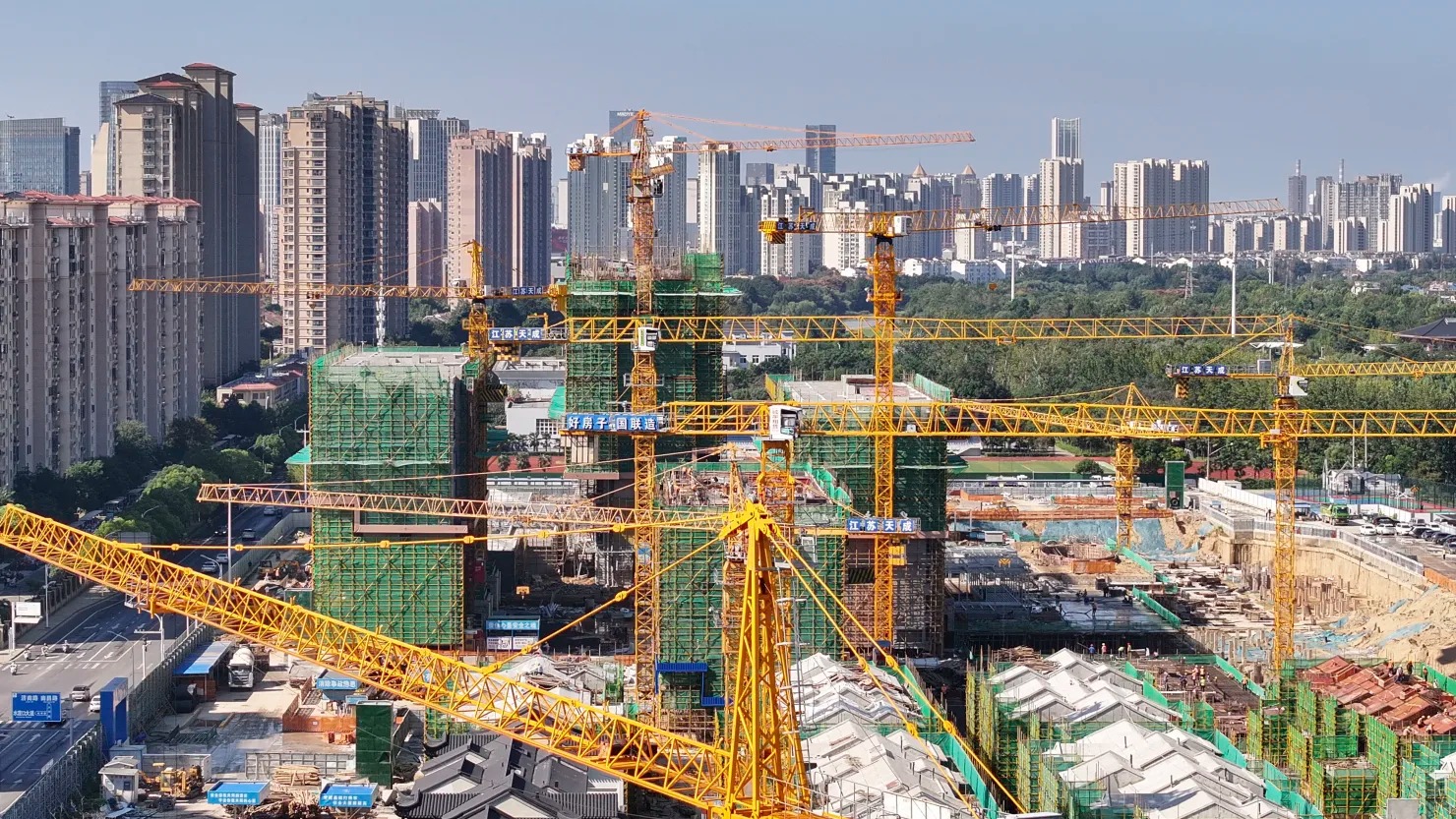
China’s real estate downturn is intensifying, with China property slump forecasts for 2025 now appearing far worse than expected, according to a new report from S&P Global Ratings released Thursday. The firm warned that the country’s property sector is set to contract for a fifth consecutive year, delaying any hopes of a near-term recovery in one of the world’s most crucial housing markets.
S&P analysts now expect new home sales to fall by 8% this year to between 8.8 trillion yuan and 9 trillion yuan ($1.23 trillion to $1.26 trillion). That marks a sharper decline than the 3% drop the agency projected in May, when analysts anticipated stronger policy support from Beijing to counter external pressures such as the ongoing trade tensions and weak consumer sentiment.
“The main reason for the weaker outlook is that homebuyers’ sentiment is still pretty fragile,” said Edward Chan, director of corporate ratings at S&P Global Ratings. “So the government will need to continue to support the sector and help restore homebuyers’ confidence.”
Beijing last September called for efforts to “halt” the real estate slide, but momentum for major new support measures has waned. S&P noted that China’s five-year loan prime rate — the benchmark for most mortgages — has dropped only 10 basis points so far this year, compared with a 60-basis point cut in 2024, suggesting a more cautious approach to monetary easing despite the ongoing China property slump.
In August, three major cities eased home purchase restrictions to allow multiple-property ownership, but S&P said those adjustments mostly benefited suburban markets rather than prime urban centers. “If demand can be stabilized first in higher-tier cities, particularly in the first-tier ones, that would help the recovery trajectory be more sustainable,” Chan added.
Turnaround Remains Elusive
For now, prospects for a rebound in China’s housing sector look increasingly distant. With projected sales at 9 trillion yuan or less this year, China’s property market has effectively halved in size since 2021, when total sales reached 18.2 trillion yuan. S&P expects an additional decline of 6% to 7% in 2026, alongside price drops of 1.5% to 2.5% for newly built homes.
Consumer confidence has been further eroded by stalled construction projects, as developers struggle with liquidity and rising debt. Traditionally, Chinese buyers purchased apartments before completion, but delivery delays have shaken trust. To address this, Beijing introduced a “whitelist” program last year to fund approved unfinished developments.
As of August, unsold completed housing inventory rose to 762 million square meters, up from 753 million in December 2024 — a clear sign that supply continues to outpace demand. “The government has been doing quite a lot to assure people that getting their apartments isn’t the issue now,” Chan said. “The issue is that overall national demand is weaker than expected.”
Policymakers are expected to step in selectively as the market shows further signs of strain. August brought a combination of looser purchase restrictions and a public acknowledgment by Premier Li Qiang that the property downturn remains unresolved, hinting at potential new measures to come.
Despite the grim short-term outlook, there are early signs of stabilization. Sales by China’s top 100 developers edged up 0.4% year over year in September, according to industry data cited by S&P. As weaker developers exit and the market consolidates, analysts believe the long-term outcome could be a smaller yet more sustainable housing sector. “The end result may be a smaller market,” S&P concluded, “but also a healthier and more resilient sector.”

