
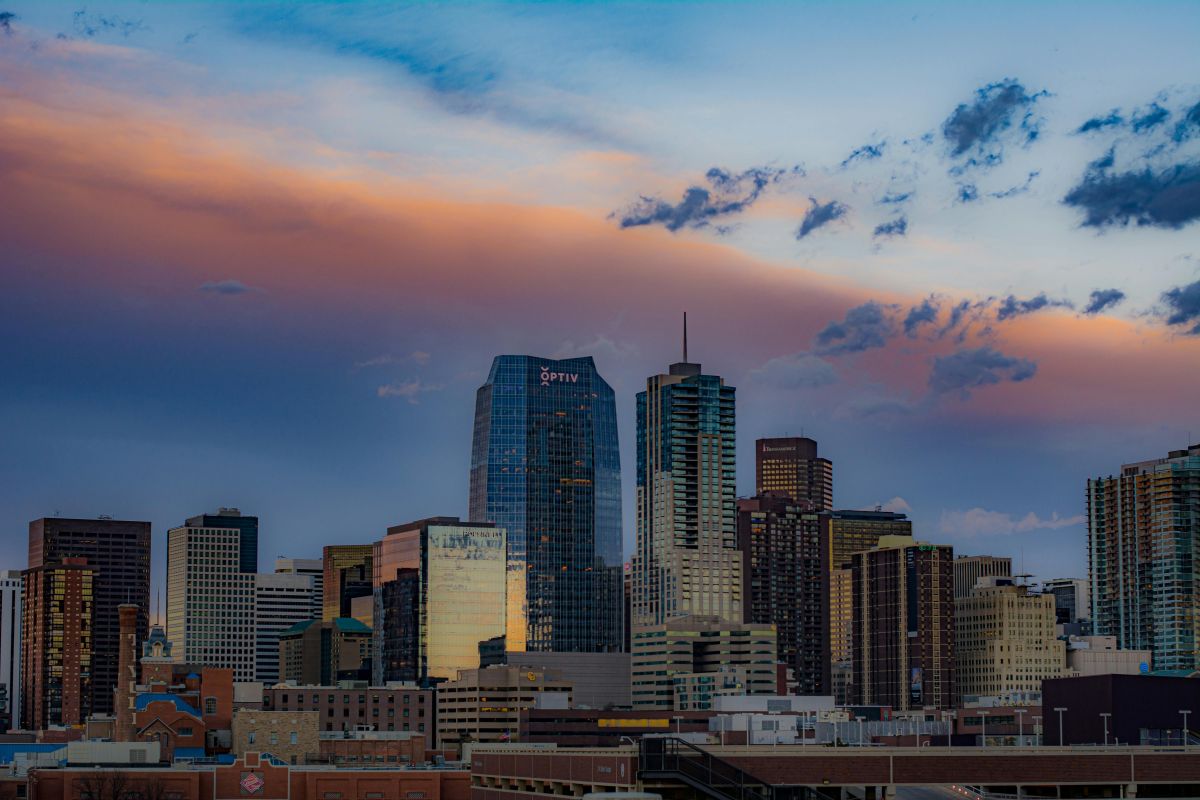
The ongoing Denver downtown revival is attracting national attention as developers, investors, and city leaders search for solutions to one of the highest office vacancy rates in the United States. At the center of the effort is developer Asher Luzzatto, who has been acquiring distressed office buildings across downtown Denver with plans to convert them into residential communities aimed at rebuilding the city’s struggling urban core.
Luzzatto, a 38-year-old real estate developer known for his unconventional redevelopment strategy, believes many aging downtown office districts across the country can be transformed into mixed-use residential hubs. His approach focuses on purchasing vacant office towers at deeply discounted prices and repositioning them into housing projects designed to bring permanent residents back into central business districts.
The strategy is unfolding in Denver, where office vacancy levels have climbed to nearly 40% in parts of the downtown core, according to market data from CBRE. That figure ranks among the highest vacancy rates in the nation’s top metropolitan areas and reflects the long-term effects of remote work, changing office demand, and shifting migration patterns after the pandemic.
Like many major U.S. cities, Denver has struggled to restore daily downtown foot traffic as companies reduce office footprints or adopt hybrid work schedules. Empty office towers, declining retail activity, and weakened commercial demand have raised concerns among property owners, investors, and local officials about the long-term viability of traditional urban business districts.
Luzzatto argues that the solution is not to wait for office demand to return to pre-pandemic levels. Instead, he believes downtowns must evolve into neighborhoods where people can live, work, shop, and socialize without depending entirely on corporate office tenants.
His redevelopment strategy centers on creating residential density in areas previously dominated by office buildings. By converting underused towers into apartments and mixed-use properties, he hopes to create a more sustainable urban environment that supports restaurants, retail businesses, entertainment venues, and public transportation systems throughout the week rather than only during business hours.
Real estate analysts say Denver has become an important testing ground for adaptive reuse projects because falling office values have created opportunities for developers willing to take on complex redevelopment risks. In several cases, office properties are trading at prices significantly below their previous valuations, opening the door for residential conversion projects that would have been financially impossible a few years ago.
However, transforming office towers into residential buildings remains expensive and technically challenging. Developers must address zoning restrictions, building design limitations, infrastructure upgrades, and financing hurdles before projects can move forward. Older office layouts often require extensive reconstruction to accommodate natural light, plumbing systems, and residential floor plans.
Despite these obstacles, supporters of the Denver downtown revival believe residential conversion projects could play a key role in stabilizing struggling urban cores nationwide. Cities such as Chicago, San Francisco, Portland, and St. Louis are also exploring office-to-residential initiatives as vacancy rates continue pressuring commercial property owners.
The broader commercial real estate sector is already facing major structural changes. Rising interest rates, slowing office demand, and declining property values have forced landlords and investors to rethink traditional strategies across multiple asset classes. Apartment owners, office landlords, and hospitality operators are all adjusting to a market environment shaped by higher borrowing costs and slower revenue growth.
One of the clearest examples of industry consolidation emerged recently with the announcement of a $69 billion merger agreement between apartment giants AvalonBay Communities and Equity Residential. The deal is expected to create the largest apartment owner in the United States and highlights growing pressure on multifamily companies to improve scale, reduce expenses, and strengthen investor confidence.
Industry experts say the megamerger reflects broader financial challenges within the apartment sector after years of slowing rent growth and rising operating costs. Many landlords are now focused on cutting expenses and improving operational efficiency as public market valuations remain below underlying property values in several major markets.
Meanwhile, housing policy debates continue reshaping urban real estate dynamics in cities like New York. Mayor Zohran Mamdani recently proposed new measures aimed at supporting distressed rent-stabilized landlords while also advancing plans for a potential rent freeze. Under the proposal, certain vacant apartments could qualify for one-time rent increases if owners meet specific conditions tied to city housing programs.
The plan attempts to balance affordability concerns with the financial pressures facing property owners operating aging apartment buildings. Real estate professionals say the outcome of these policy debates could influence future investment activity in New York’s multifamily market and shape how landlords manage regulated housing portfolios.
Hospitality markets are also experiencing major cost pressures. In New York City, hotel owners recently approved one of the most expensive labor agreements in the industry’s history after reaching a new contract with union workers ahead of upcoming global tourism events. The agreement includes significant wage increases over the next eight years, with some hotel employees projected to earn six-figure salaries by 2032.
Industry analysts expect higher labor expenses to eventually flow through to consumers in the form of increased room rates and hospitality costs. Hotel operators across major markets are already adjusting pricing strategies as wage inflation, insurance costs, and operating expenses continue climbing.
Back in Denver, Luzzatto’s redevelopment vision represents a larger national conversation about the future of downtown America. For decades, urban centers depended heavily on office workers to sustain retail corridors, transit systems, and commercial activity. However, hybrid work trends have permanently altered how businesses and employees interact with city centers.
Many commercial real estate investors now believe successful downtown districts will need stronger residential populations to remain economically vibrant. Residential development can help create consistent demand for restaurants, grocery stores, fitness centers, entertainment venues, and local services that no longer benefit from five-day office occupancy patterns.
The challenge, however, lies in convincing people to move back into downtown environments still struggling with safety concerns, infrastructure gaps, and uneven economic recovery. Cities must compete not only with suburban housing markets but also with changing lifestyle preferences among younger professionals and families seeking affordability and flexibility.
Supporters of adaptive reuse projects argue that revitalized downtown neighborhoods can offer walkability, transit access, cultural amenities, and mixed-use convenience that suburban communities often cannot match. If executed successfully, office-to-residential conversions may help reduce vacancy rates while creating more balanced urban economies less dependent on corporate leasing cycles.
Critics remain cautious about whether large-scale conversions alone can solve the financial and social challenges facing many downtown districts. Some analysts warn that population growth, affordability concerns, and public infrastructure investment will ultimately determine whether these redevelopment strategies succeed over the long term.
Still, the Denver downtown revival is emerging as one of the most closely watched commercial real estate experiments in the country. Investors, developers, and city officials across the United States are monitoring whether residential conversions can breathe new life into vacant office corridors and reshape the future of urban commercial real estate.

