
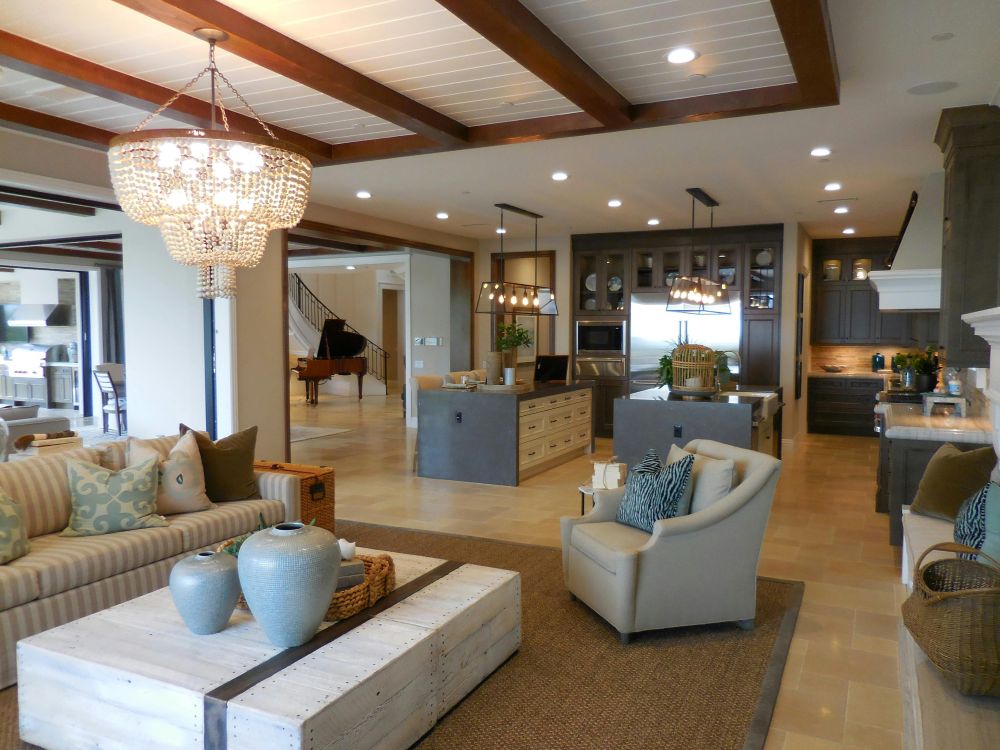
Global Luxury Homes continued to attract strong investor demand in 2025 as high-net-worth buyers increased acquisitions across major international markets. Luxury residential prices outperformed traditional housing sectors for the second consecutive year, supported by limited supply, rising global wealth creation, and renewed cross-border investment activity. Analysts say affluent buyers remain focused on premium real estate assets despite ongoing volatility in interest rates and global economic uncertainty.
According to new international market data, the Prime International Residential Index, which tracks leading luxury housing destinations worldwide, recorded a 3.2% annual increase in 2025. Price growth was reported in 73 out of 100 tracked luxury markets, highlighting continued resilience in the upper-tier housing segment. While mainstream housing markets faced slower activity in several regions, prime residential assets maintained momentum due to sustained demand from wealthy domestic and foreign buyers.
Tokyo emerged as the strongest-performing luxury market during the year. Prime new-build apartment values surged by 58.5%, fueled by limited inventory and growing investor confidence in the Japanese market. Dubai also posted another year of substantial gains, with luxury home prices rising 25.1%. The emirate maintained its position as one of the world’s busiest ultra-luxury residential markets, especially for properties valued above $10 million.
Across regional markets, the Middle East led annual luxury price growth with a 9.4% increase. Latin America and the Caribbean followed with gains of 4.7%, while Asia-Pacific advanced 3.6%. Europe also posted stable growth at 3.3%. However, North America recorded a modest decline of 0.9%, mainly due to softer conditions in Canada and slower transaction activity in select metropolitan areas.
Industry analysts noted that luxury real estate has increasingly separated itself from broader housing trends. Wealth generation among high-income individuals continues to support premium property values even as average housing affordability weakens in many countries. Investors are prioritizing stable real estate assets that can preserve capital and generate long-term value amid uncertain financial conditions.
Another factor supporting Global Luxury Homes is the ongoing shortage of premium move-in-ready properties. Buyers in the luxury segment are showing stronger preference for turnkey residences that require minimal renovations. Rising labor expenses, construction delays, and supply-chain disruptions have made fully completed properties significantly more attractive to international buyers seeking convenience and speed.
Changing lifestyle patterns among ultra-high-net-worth individuals are also reshaping luxury housing demand. Wealthy buyers are increasingly spreading their time across multiple countries rather than maintaining one permanent residence. As a result, demand for luxury rental properties and second homes has accelerated in global financial centers and resort destinations alike.
Real estate consultants say established markets such as London, Singapore, Miami, and Dubai are increasingly functioning as flexible lifestyle hubs instead of permanent residential bases. Buyers now prioritize mobility, tax planning, political stability, and global connectivity when selecting luxury properties. This shift has encouraged stronger demand for properties located near financial districts, airports, cultural destinations, and waterfront areas.
Looking ahead, several international markets are expected to maintain strong price momentum. Mumbai is forecast to lead near-term luxury housing growth with projected gains approaching 8.7%. Brisbane is also gaining investor attention as a rising luxury destination supported by population growth and infrastructure investment. Meanwhile, Miami continues to benefit from sustained wealth migration and international capital inflows, with prime residential prices climbing sharply over the past five years.
Hong Kong has also shown early signs of stabilization in its super-prime housing market after a prolonged slowdown. Investors are gradually returning as financing conditions improve and confidence in regional economic activity strengthens. Market participants believe premium residential assets in gateway cities will continue attracting institutional and private capital throughout 2026.
The broader luxury housing outlook suggests that high-end residential markets remain closely tied to global wealth trends, supply limitations, and international mobility patterns. Although economic risks remain, luxury real estate continues to demonstrate resilience due to strong buyer liquidity and long-term demand for exclusive, well-located properties across major global cities.

